



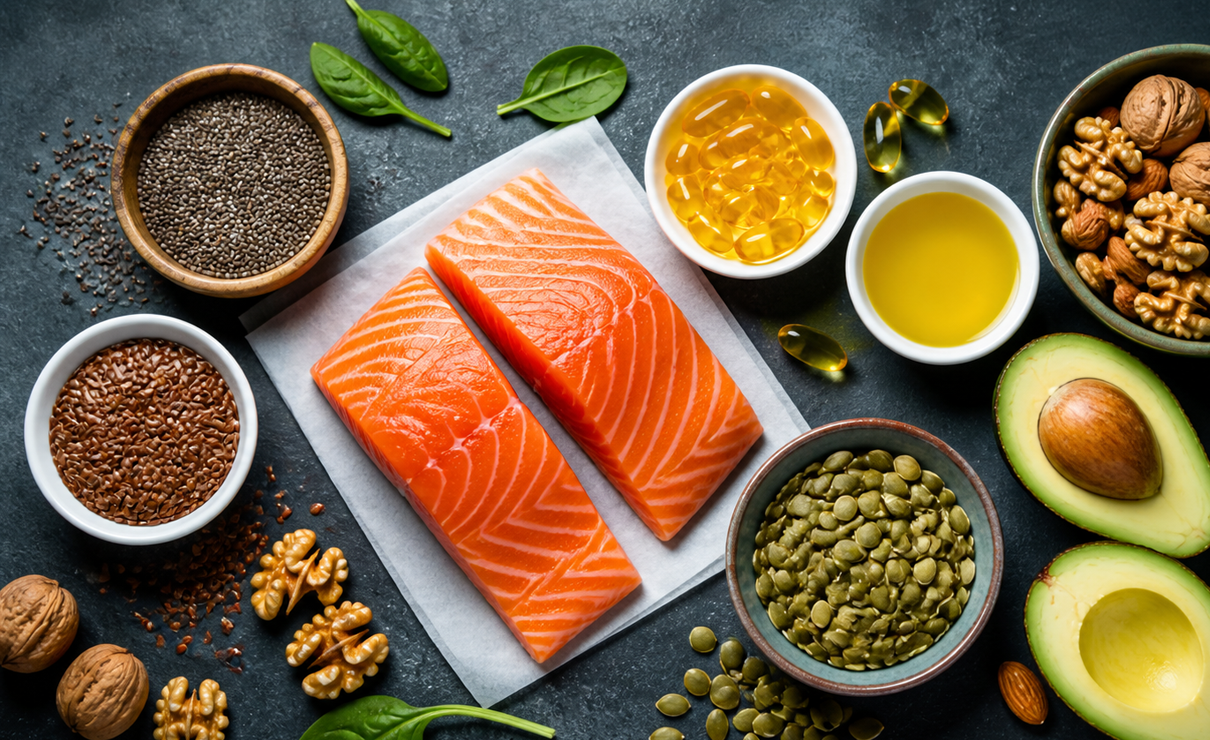
Omega-3 fatty acids are one of the most important nutrients you can include in your diet, yet many people don’t get enough of them. These essential fats play a major role in overall health, and they can also support your weight loss efforts in ways that go beyond just calories.
Omega-3 fatty acids are a type of polyunsaturated fat that your body cannot produce on its own, meaning you have to get them through food.
The three main types of Omegas
- EPA (eicosapentaenoic acid) – supports heart health and reduces inflammation
- DHA (docosahexaenoic acid) – important for brain function and overall health
- ALA (alpha-linolenic acid) – found in plant-based sources and partially converts to EPA and DHA
Common sources
- Fatty fish (salmon, mackerel, sardines)
- Chia seeds and flaxseeds
- Walnuts
- Fish oil supplements
Omega-3s don’t directly “burn fat,” but they create the right environment in your body to make fat loss more effective and sustainable.
Benefits of Omega-3s
1. Reduces inflammation
Chronic inflammation can make it harder for your body to lose weight and recover from exercise. Omega-3s help lower inflammation, which can improve metabolism and recovery.
2. Improves insulin sensitivity
Better insulin sensitivity means your body is more efficient at using carbohydrates for energy instead of storing them as fat. This ties directly into easier weight management.
3. Supports fat metabolism
Omega-3s may help your body use fat as a fuel source more efficiently, especially when combined with regular exercise.
4. help control appetite
Some research suggests omega-3s can help regulate hunger hormones, potentially leading to better appetite control and fewer cravings.
5. enhance exercise recovery
Faster recovery from workouts means you can train more consistently, which is key for fat loss and improving body composition.
Additional health benefits
Beyond weight loss, omega-3s are essential for:
- Heart health
- Brain function and mood support
- Joint health
- Reducing risk of chronic disease
How to add more omega-3s to your diet
- Aim to eat fatty fish 2–3 times per week
- Add chia or flax seeds to smoothies, oatmeal, or yogurt
- Include walnuts as a snack
- Consider a high-quality fish oil supplement if needed
Omega-3 fatty acids are a great addition to any nutrition plan. While they aren’t a magic solution for weight loss, they support key processes like inflammation control, insulin sensitivity, and recovery that make losing fat more effective.
Stay Healthy, Stay Fatty!
~Coach Ame